LAND/SCAPE N.5
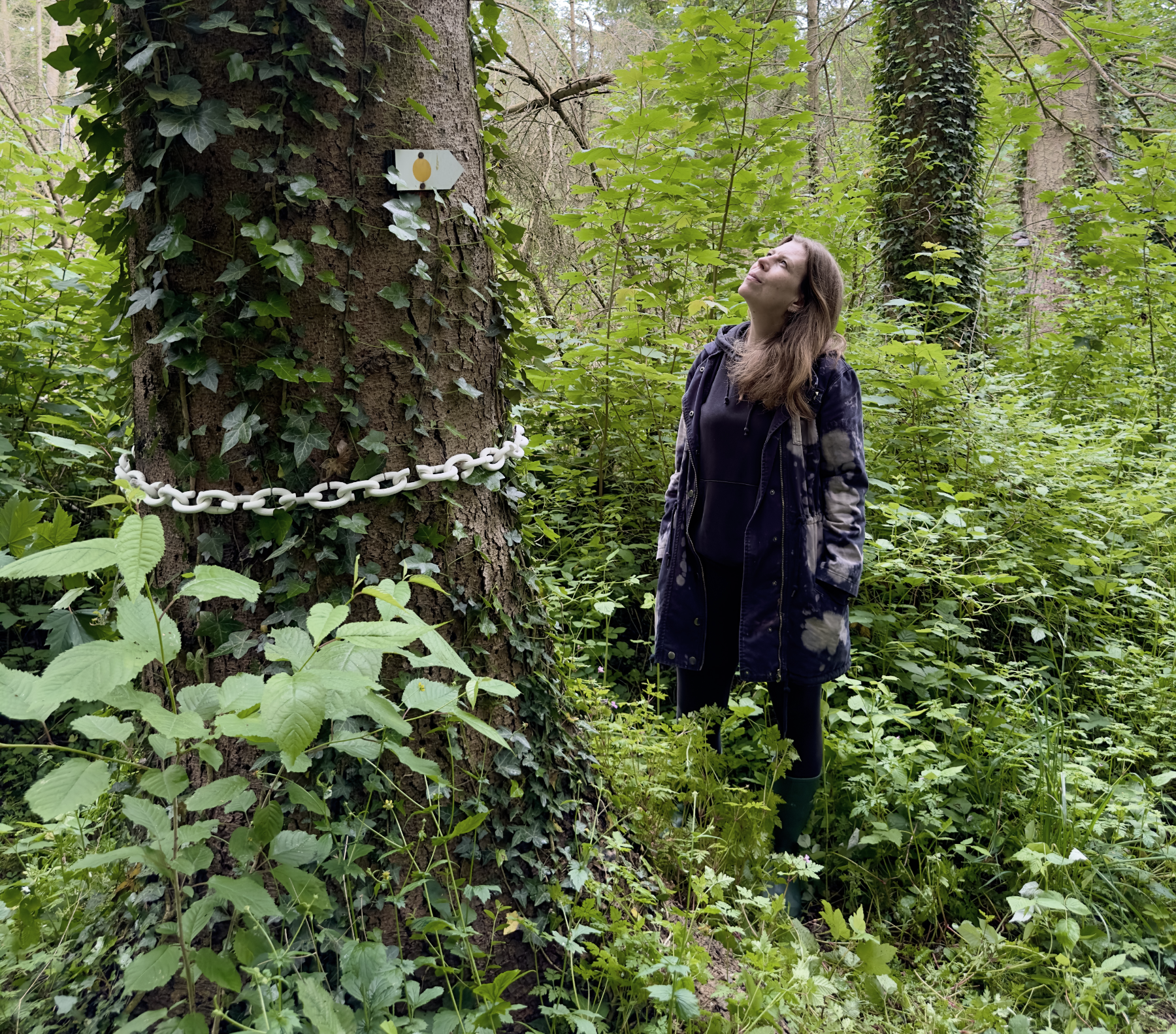
LAND/SCAPE N.5 - 2024
Land-art intervention, fifth work in the Land/scape series
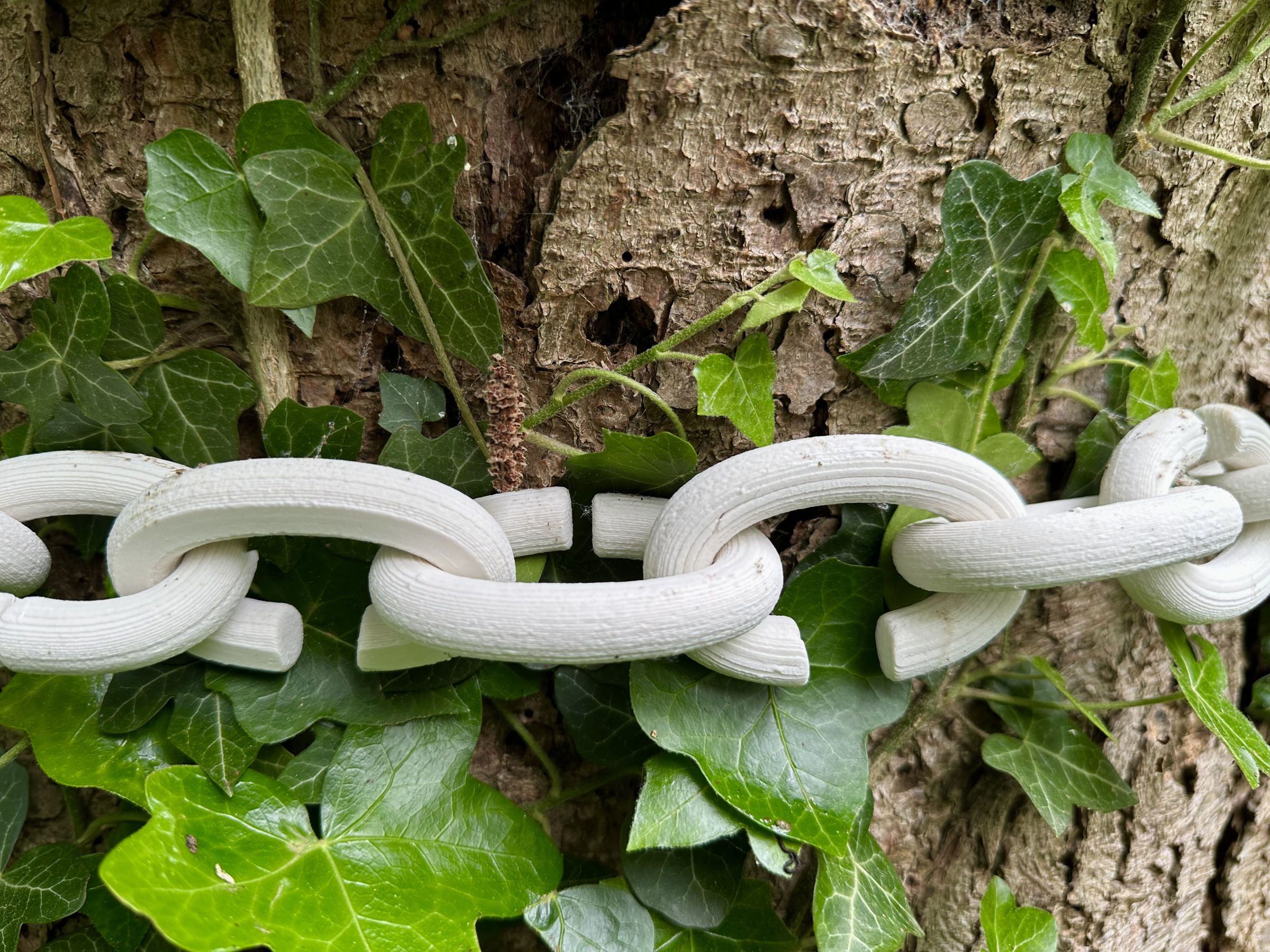
3D-printed porcelain
Dimensions variable
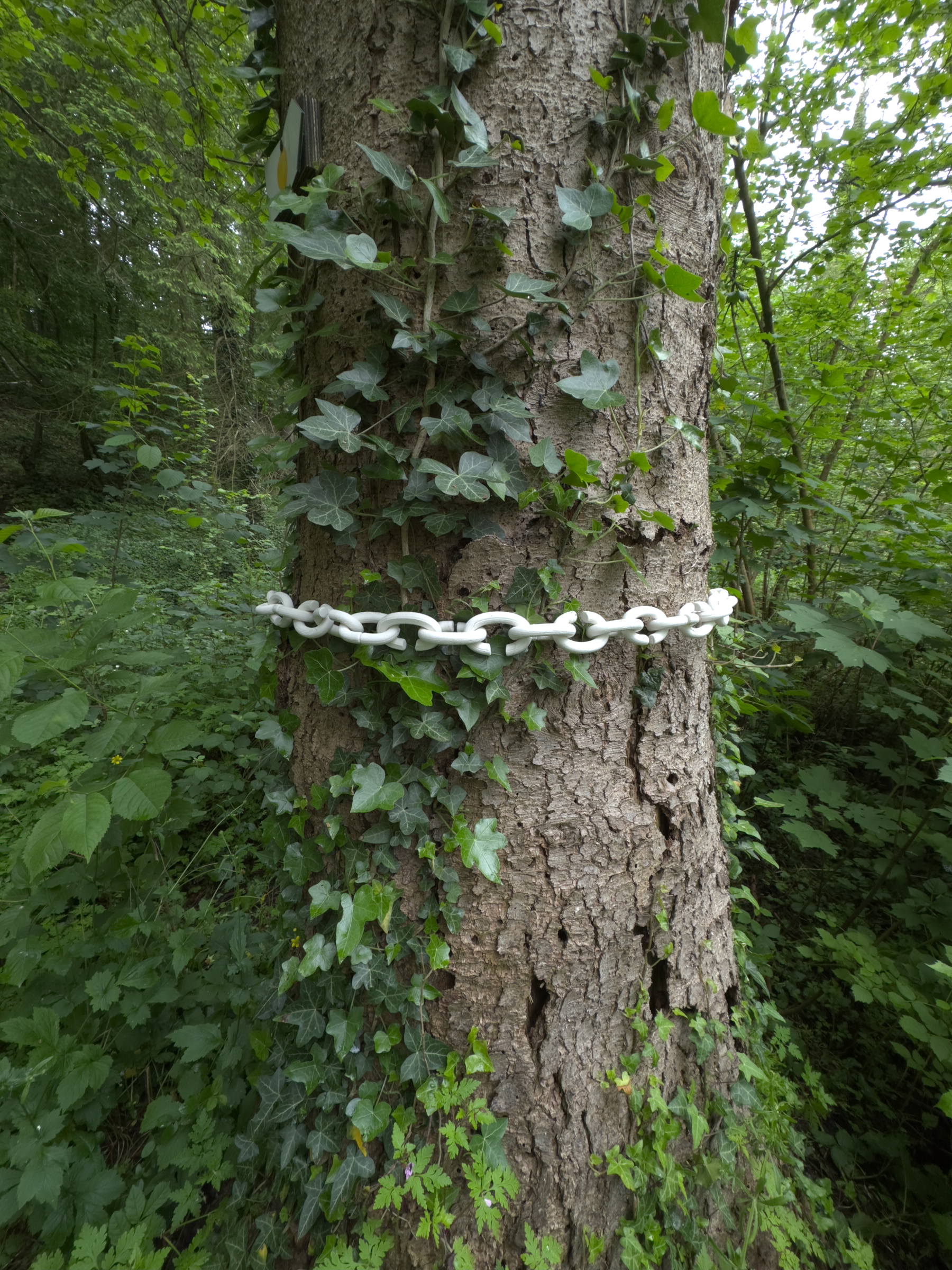
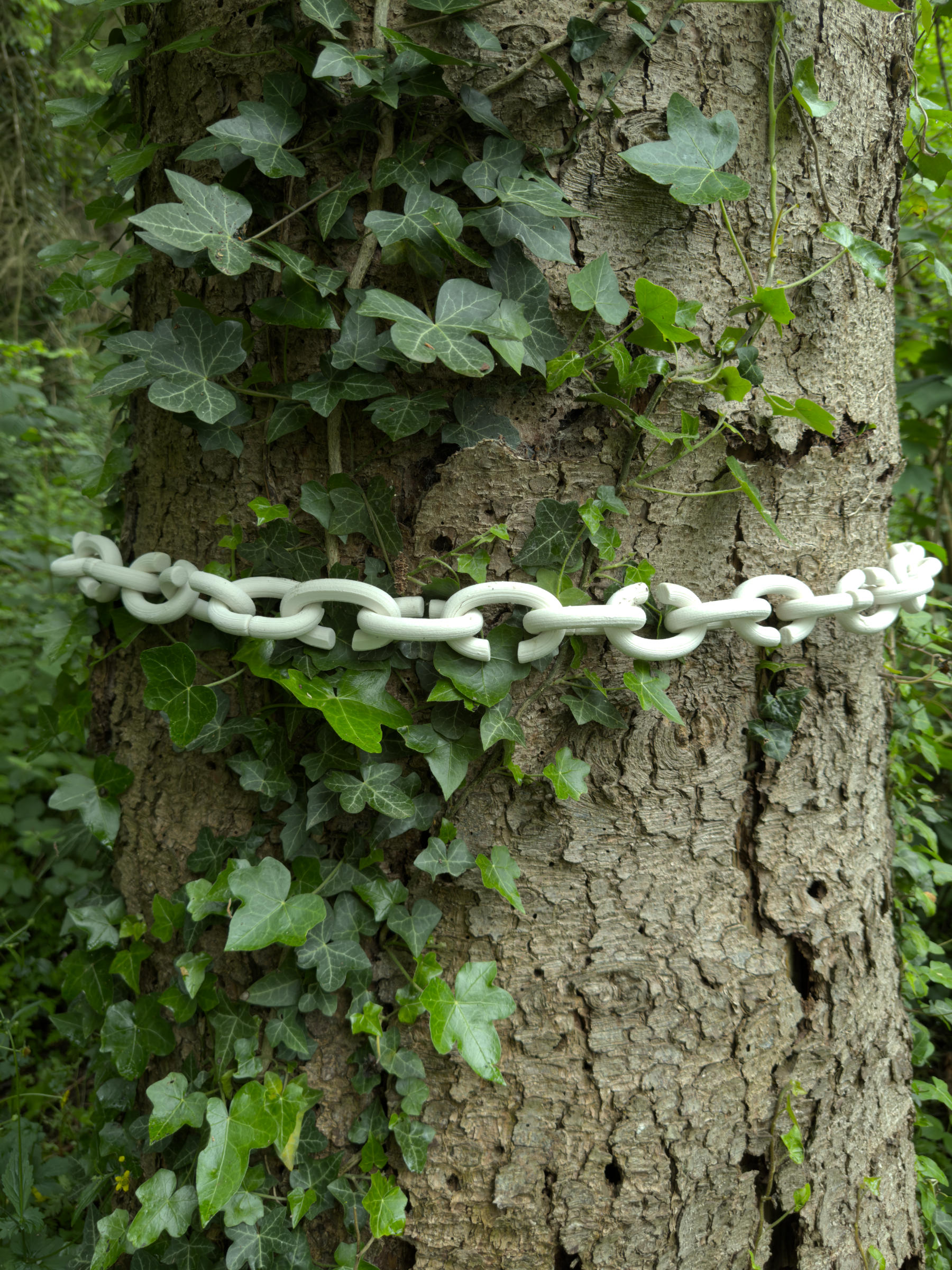
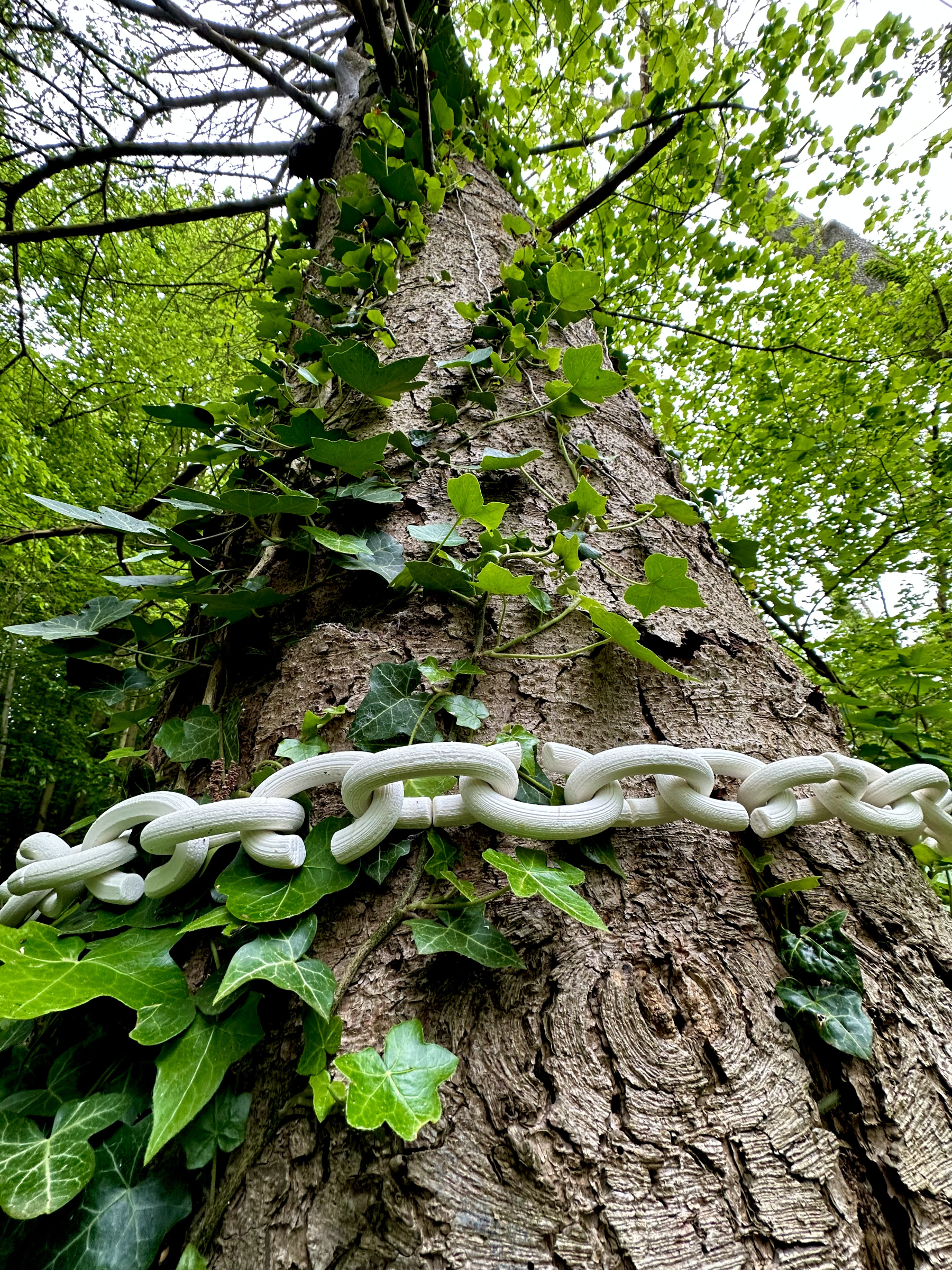
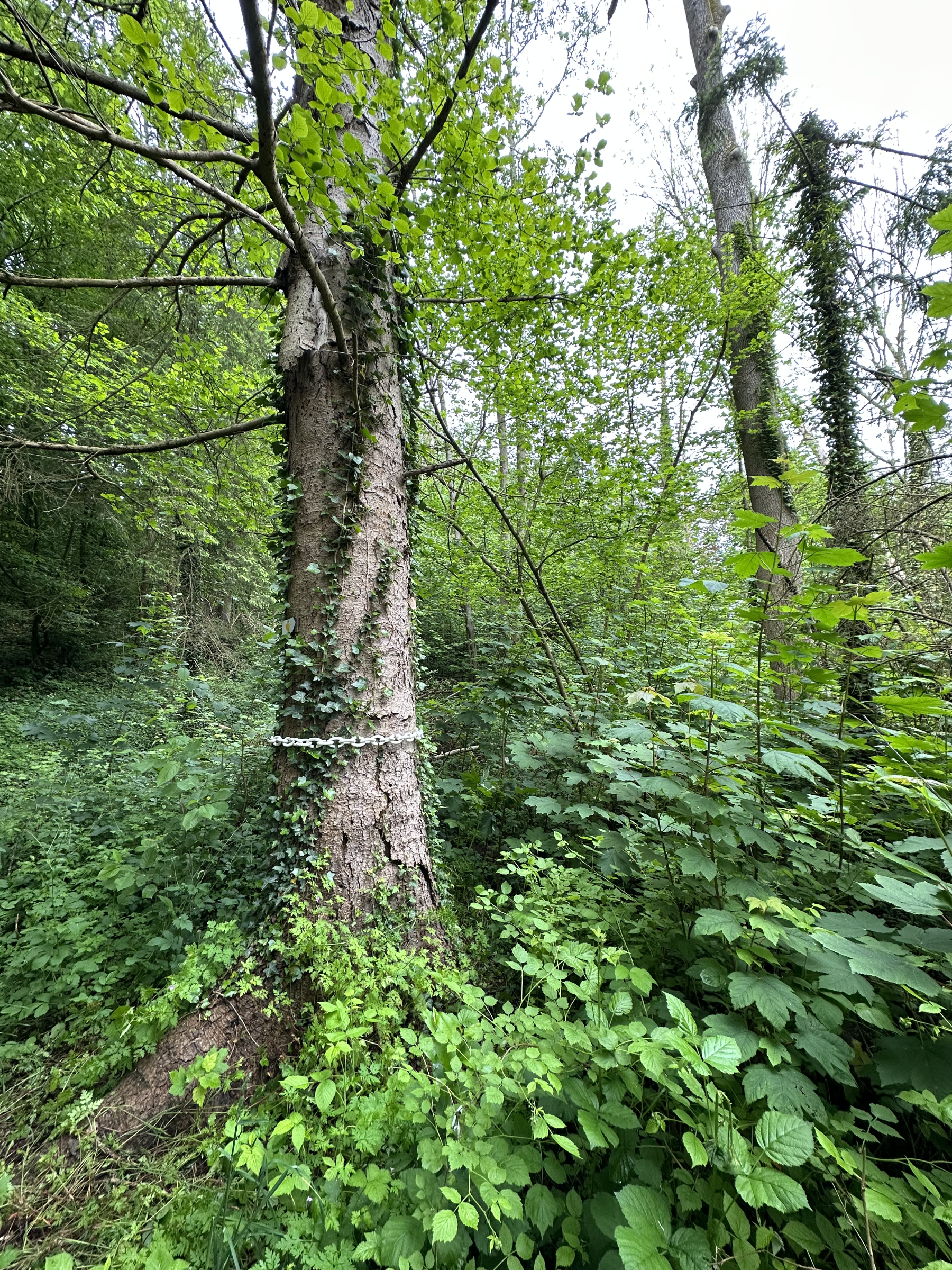
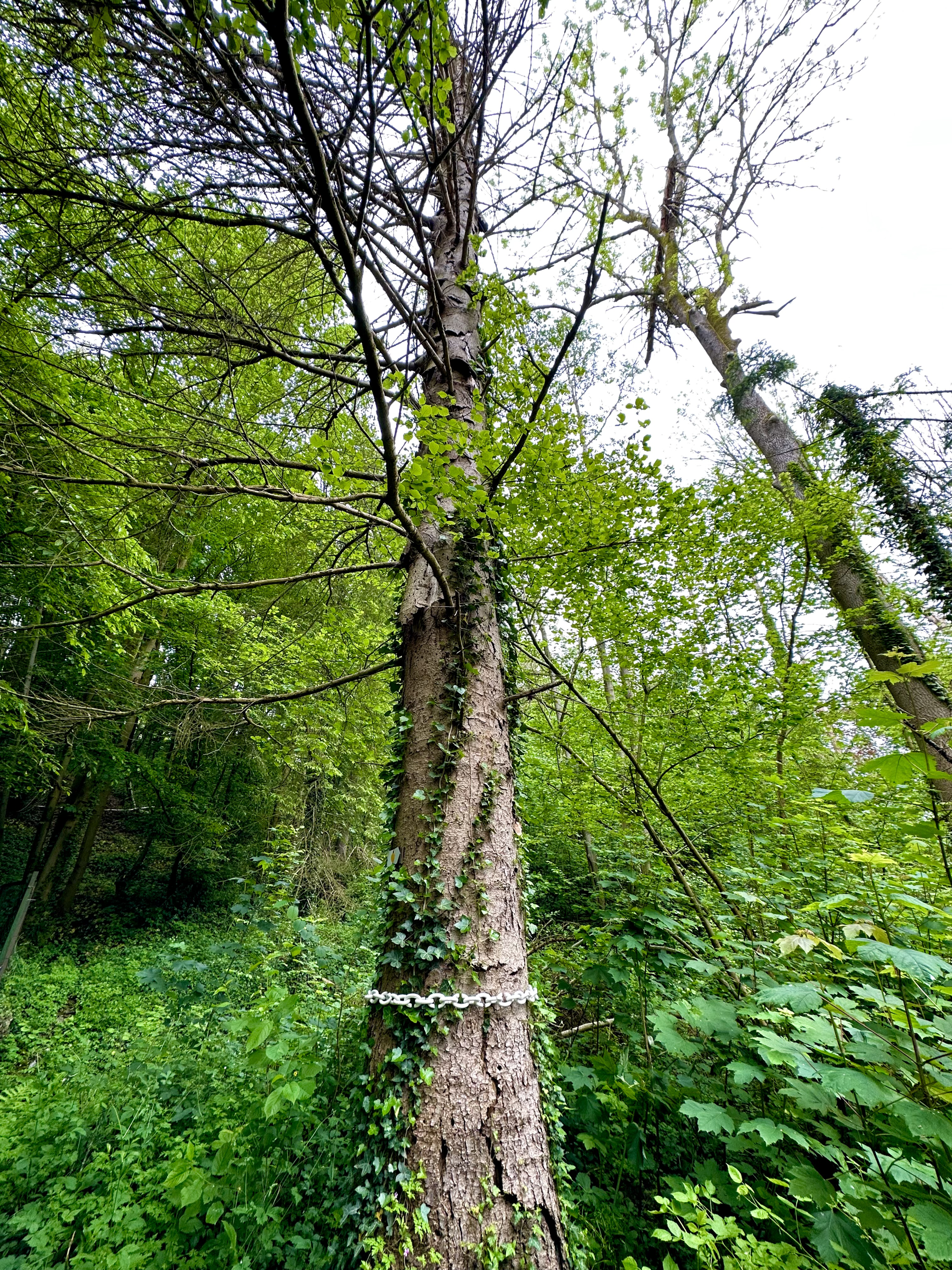
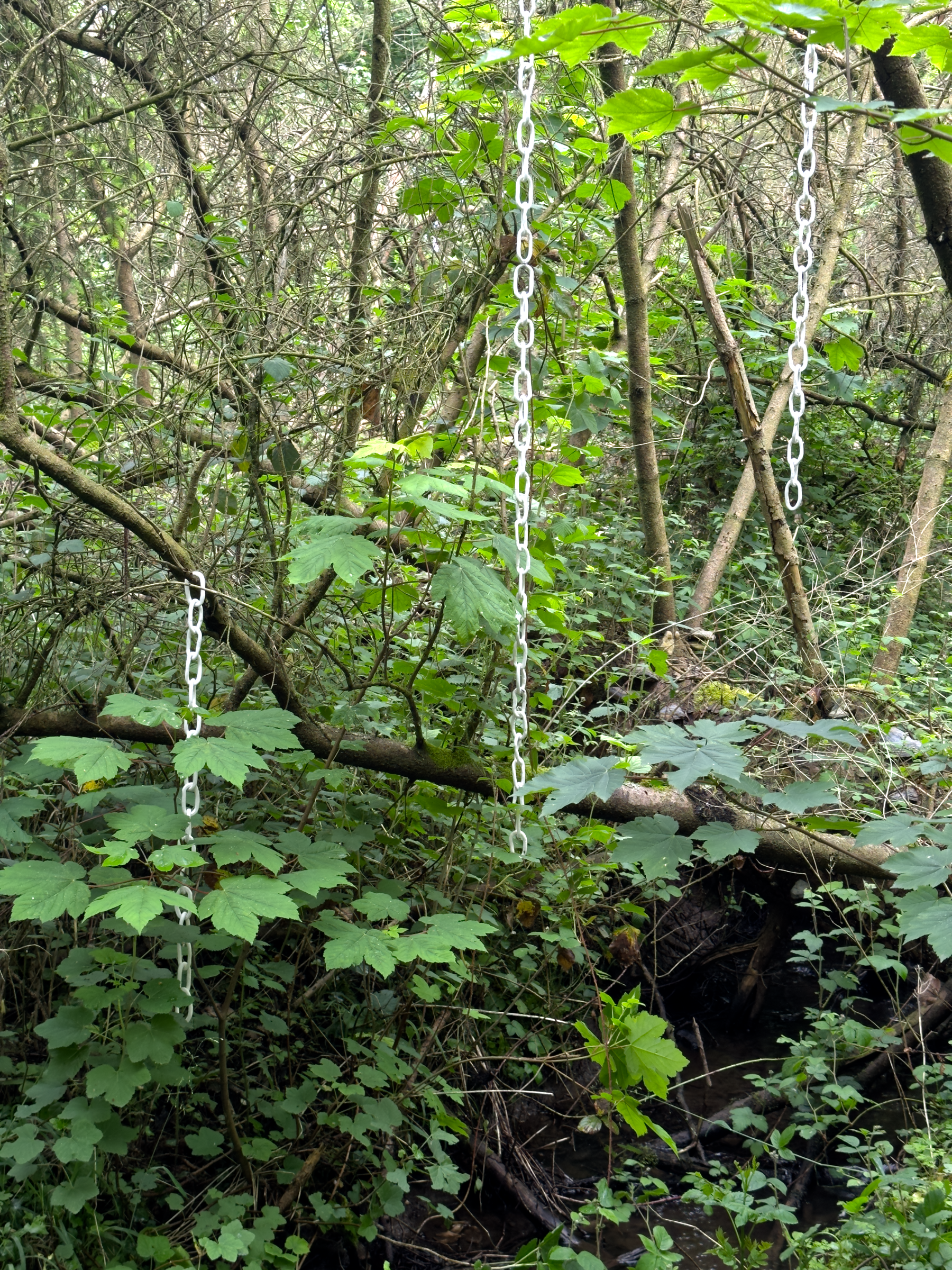
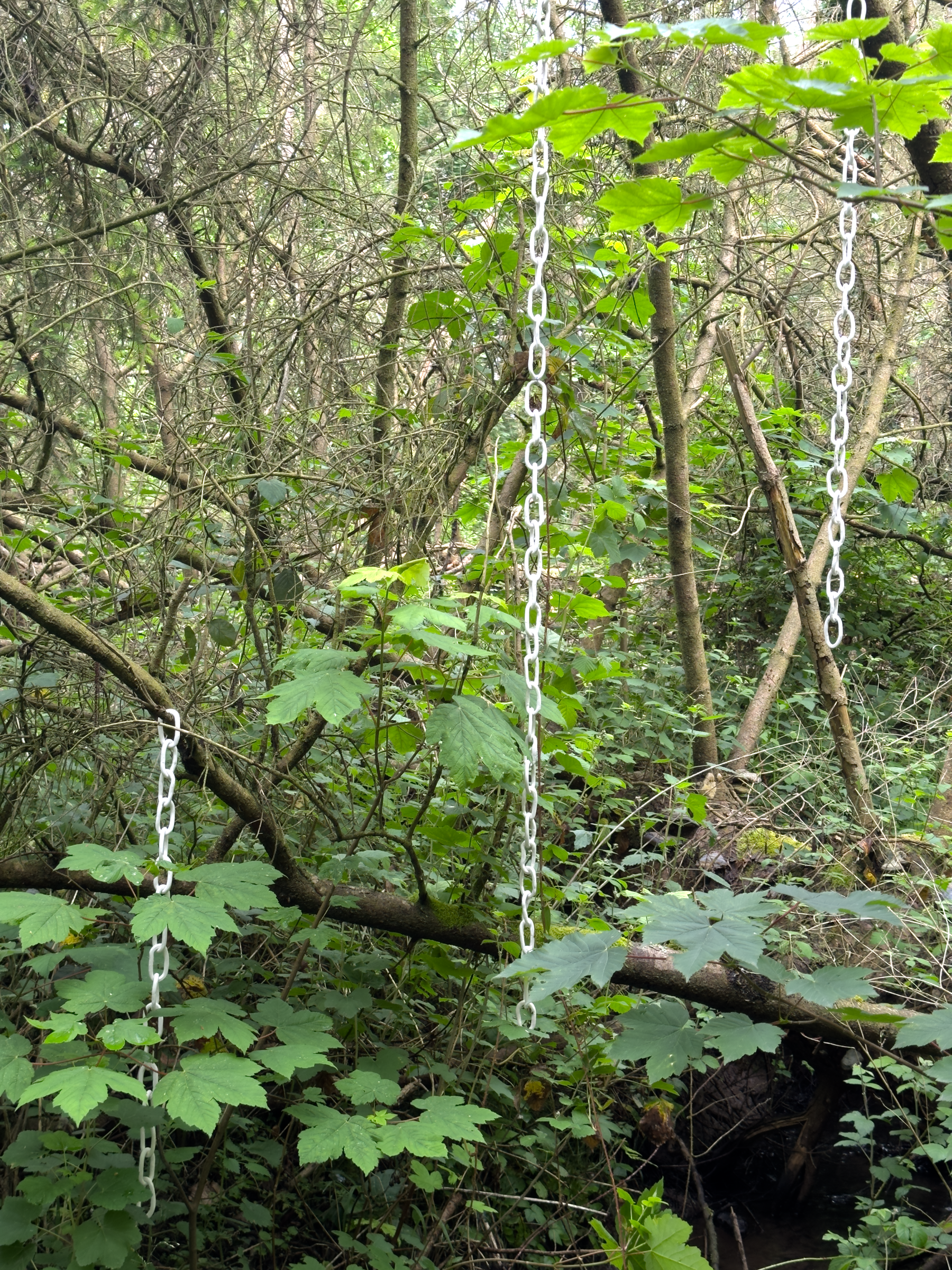
Land/scape N.5 is a land-art intervention: a set of chains, 3D-printed in porcelain and hung in the trees of a forest. It is made to be repeated: the same chains hung again in another wood or someone's garden, anywhere there are trees. A chain goes around what you have decided is yours: a thing you own, an animal you keep, a person you have enslaved. It makes a living being into property, into something that exists to serve and whose rights no one thinks to consider. This is also how the West holds nature, though we seldom put it so bluntly: as a resource that owes us its use, ours to take from without asking. These chains, though, are porcelain, white and refined and far too brittle to hold anything down. They are a piece of the very earth they pretend to master, dug up and made precious.
That nature is a construction and not a given is, by now, a commonplace in critical theory. The more interesting question is how it was built, and how it came to feel like common sense. We picture nature as whatever is left once people step back, something untouched at the edge of the human world. But that edge is drawn, and keeps being redrawn, and not only in landscape painting or on the map. It is drawn in law, where land becomes property; in natural science, where the living world is sorted into species and specimens; in the ordinary habit of looking at a place and judging it empty, or wild, or ours. To picture, name, classify or claim a territory is never only to describe it. It is already to decide what it is for and who is allowed to use it. Naming something nature is itself a colonial act: the same operation that draws a colony cuts a living world off from the people who belong to it and turns what was a relation into a resource, set below the human and kept there to be used.
None of this is historical. The same logic drives the digital economy, and the more weightless the technology looks, the more ground is opened to feed it: the rare earths and critical minerals behind every battery, chip and AI data centre are still taken from the forests, salt flats and rivers of the global south, along the lines the old maps drew. To name something a natural resource is still to authorise its removal.
Photographs from La Fête de Mai, land art event in the forests of Gesves (Belgium), 2024